Throughout the workday, everyone in an organisation is required to learn new things at various times, like when a new system is to be implemented. When introducing new systems, many system vendors prefer to teach new knowledge through extensive teacher-led training. But does this process really have to be time-consuming and complex? Or is there a more effective way of teaching new users new systems?
How can you make the process of implementing new systems strategic?
As implementing new systems can be complicated, it is important to plan your user onboarding within the organisation efficiently, as this increases customer satisfaction and the user experience. Users' motivation can easily fade if they are required to digest information they do not fully comprehend or handle too much data at once. As an organisation, you therefore need to carefully plan which parts of the introduction should be included in a teacher-led education and which should be made available digitally.
By creating system support based on the user's unique needs, it is possible for them to engage with the information when it suits them. Some knowledge is better suited to the job than to the introduction.
If you are already in the system onboarding process, digitise training to simplify and save time for customers who buy your systems or users learning a new system within your organisation. New users can then locate the information they need efficiently and return to it as needed. As a result, responsible product specialists or knowledge owners are relieved, allowing them to devote their time to other value-creating tasks.
Oxceeds support portal
Our customer Oxceed has developed a platform that gives companies a better financial overview, using InfoCaption as a digital support platform. They have used technical solutions that facilitate onboarding new users in Oxceed's software and deliver benefits for their customers, using the Oxceed portal.
Robert Paulsson (Head of Customer Success) at Oxceed, explains why a support platform was the right choice for their company: "InfoCaption is a fantastic tool for Oxceed! We at Customer Success use it daily for user onboarding, customer-specific guides and additional descriptions for our customers who work in Oxceed. Being able to reuse the guides, create portals and offer other smart solutions for our customers is exactly how we want to work.”
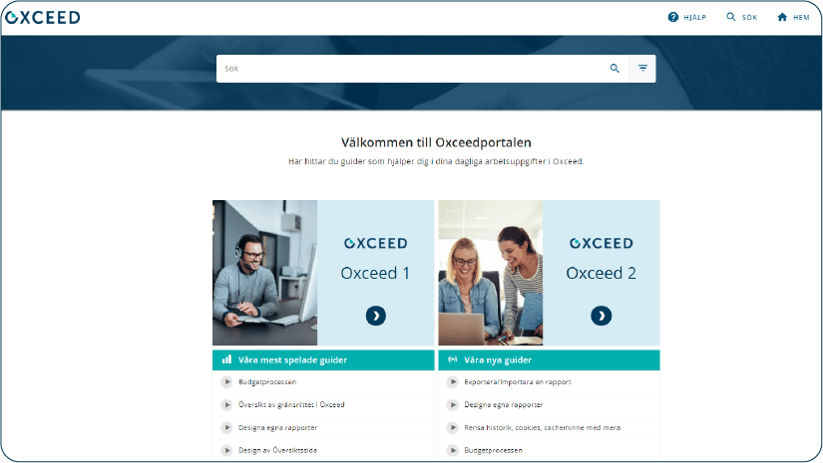 Oxceed's support portal, where customers can find their guides.
If you, like Oxceed, use guides and other smart technical solutions directly on the platform, you increase user-friendliness. You increase trust and confidence in the organisation by making it more user-friendly. And it is the dissemination of knowledge that fosters a safe workplace and a long-term working relationship.
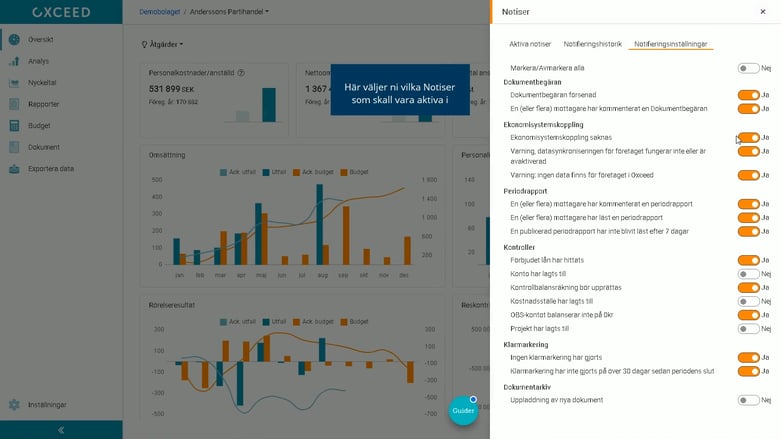
One of Oxceed's guides that explains a certain task in their application. Click here to see the guide.
As a result, we recommend that knowledge be distributed tactically and gradually to users when they need it, rather than when it is assumed that they need it. Simplifying for new users from the start creates favourable conditions for user success and, as a result, favourable resource conditions for the organisation.
3 simple tips for a successful user onboarding
-
1. Repetition, repetition, repetition. It may sound annoying, but do not forget that knowledge needs to be repeated to not be forgotten. If users get information repeatedly, it also reduces the chance of making mistakes in the future.
-
Keep it simple! The content should not, of course, be too short; let it explain only what is absolutely necessary. Ask yourself, "Is this information really necessary for the user?"
-
Remember that each user learns best differently. Some people prefer to read a longer text, while others prefer to watch an instructional video. Examine what works best for your particular users.